The State of Freedom of Speech in Afghanistan Under Taliban Governance
Since the Taliban's return to power in Afghanistan in August 2021, the political and social landscape of the country has changed dramatically, and one of the most significant areas of concern has been the state of freedom of speech. The Taliban's regime has raised critical questions regarding human rights, media freedom, and the ability of citizens to express dissent without fear of reprisal. Afghanistan, which had made significant progress in media development and free expression under its previous government, is now facing a sharp regression under Taliban rule. This article examines the current state of freedom of speech in Afghanistan, the challenges facing journalists and the media, the impact on civil society, and the broader implications for human rights in the country.
Historical Context of Freedom of Speech in Afghanistan
To fully grasp the state of free expression under Taliban governance, it is crucial to understand Afghanistan's recent history. Prior to the US-led invasion in 2001, Afghanistan was under Taliban control from 1996 to 2001, during which freedom of speech and press were severely restricted. The regime imposed strict Islamic laws, and dissent of any form was brutally suppressed. Media was heavily censored, and there was little room for public expression of opposing views.
However, after the fall of the Taliban in 2001, Afghanistan saw significant improvements in its media landscape. Independent media outlets flourished, and the press enjoyed a level of freedom unprecedented in the country's history. The 2004 Afghan Constitution enshrined the right to freedom of speech , and numerous TV channels, radio stations, newspapers, and online platforms emerged. While challenges remained, especially in rural areas and for female journalists, the Afghan media sector became a symbol of the country's fragile but growing democracy.
The Taliban's Return and its Immediate Impact on Free Speech
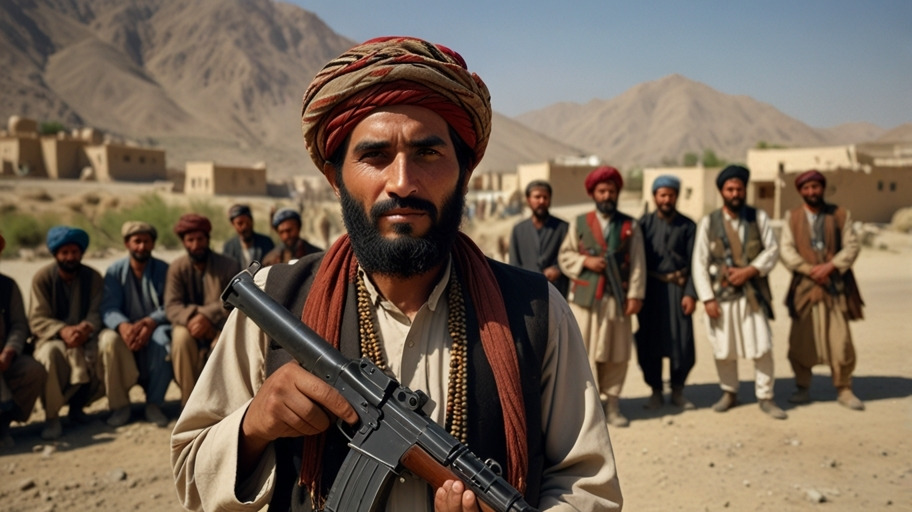
The Taliban's takeover of Kabul in August 2021 immediately signaled a sharp reversal of the progress made in the area of free speech. In their initial statements after the takeover, Taliban leaders promised a more moderate approach than during their first rule, claiming they would respect human rights, including media freedom, within the framework of Islamic law. However, the situation on the ground quickly revealed a different reality.
In the weeks and months following the takeover, many journalists, particularly women, were harassed, detained, or threatened. Numerous media outlets were forced to shut down due to pressure from the Taliban or because of financial challenges arising from the country's economic collapse. Taliban fighters were reported to have attacked journalists covering protests, especially those organized by women demanding their rights. This demonstrated that, despite their claims, the Taliban were unwilling to tolerate dissent or independent reporting.
Media Suppression and Censorship
The Taliban have implemented a range of measures that have severely restricted the ability of the media to operate freely. Many independent outlets have been forced to close, either due to direct pressure from the Taliban or because of the broader economic collapse that has crippled the Afghan economy. The Taliban's Ministry of Information and Culture has imposed new media regulations, including directives that restrict the content of news coverage and the participation of female journalists.
Journalists have been instructed to avoid "offensive" content, which includes any criticism of the Taliban or their interpretation of Islamic law. In many cases, media outlets are now required to submit their stories for approval before they are broadcast or published, a form of prior censorship that stifles independent journalism. Moreover, the Taliban's version of Islamic law is often interpreted in ways that leave little room for dissent or critical discussion.
Additionally, social media platforms, which had been widely used by Afghans to express opinions and share information, have come under increased scrutiny. Many Afghans, fearing retribution, have deleted their social media profiles or self-censored their posts. The Taliban's control over internet infrastructure has raised concerns that the regime may begin to monitor online activities more aggressively, leading to further crackdowns on digital expression.
Violence and Intimidation of Journalists
Physical intimidation and violence against journalists have become a regular feature of the media landscape in Taliban-ruled Afghanistan. Numerous reports from international organizations, such as Reporters Without Borders (RSF) and Human Rights Watch (HRW), have documented cases of journalists being detained , beaten, or even killed by Taliban forces for their reporting.
In September 2021, two Afghan journalists working for the Etilaat-e-Roz newspaper were detained and severely beaten while covering protests in Kabul. Images of their bruised and swollen bodies reclaimed widely, highlighting the extreme lengths to which the Taliban are willing to go to silence the press. In many other instances, journalists have been subjected to threats, with Taliban fighters warning them to stop reporting on sensitive topics such as human rights violations, women's protests, or anti-Taliban resistance movements.
Women journalists have been particularly vulnerable to Taliban repression. Under the previous government, many Afghan women had become prominent figures in the media industry. Since the Taliban's return, however, many have been forced out of their jobs or have fled the country. Those who remain face severe restrictions, including being barred from appearing on television or reporting on certain topics.
The State of Civil Society and Activism
Beyond the media, civil society in Afghanistan has also faced significant repression under Taliban rule. Civil society organizations (CSOs), which had been instrumental in promoting human rights, democracy, and social justice in post-2001 Afghanistan, have seen their activities curtailed. The space for public debate and activism has shrunk dramatically, and many CSO leaders have fled the country, fearing persecution.
Under the Taliban's strict interpretation of Sharia law, public demonstrations, especially those advocating for women's rights, have been met with violent crackdowns. Protests in Kabul and other cities, often led by demanding women their right to work, education, and freedom of expression, have been forcibly dispersed by Taliban fighters. Protesters have been arrested, beaten, and in some cases, disappeared.
The restrictions on civil society are part of a broader effort by the Taliban to consolidate control over all aspects of Afghan life. By silencing independent voices, whether in the media or civil society, the Taliban are working to ensure that there is no organized resistance to their rule, either domestically or internationally.
Legal and Policy Framework Under the Taliban
One of the most significant changes since the Taliban's takeover has been the dismantling of the legal and policy framework that had protected freedom of speech under the previous government. The 2004 Afghan Constitution, which enshrined the right to freedom of speech and press freedom, has been effectively nullified by the Taliban.
In its place, the Taliban have implemented a governance system based on their interpretation of Sharia law. While they have not yet formalized a new constitution or legal code, the de facto legal system in Afghanistan is one in which the Taliban's religious leaders and commanders hold ultimate authority. This has created a situation of legal ambiguity, where journalists, activists, and ordinary citizens do not know what is permissible and what is not. In practice, any expression that is seen as critical of the Taliban or their interpretation of Islam can lead to severe consequences.
The Role of International Organizations and Foreign Governments
The Taliban's crackdown on freedom of speech has drawn widespread condemnation from international organizations, foreign governments, and human rights groups. The United Nations, in particular, has expressed concern over the deteriorating situation for journalists and activists in Afghanistan. Michelle Bachelet, the UN High Commissioner for Human Rights, has called on the Taliban to respect human rights, including freedom of speech, but these calls have largely fallen on deaf ears.
Foreign governments, including the United States, have also condemned the Taliban's actions. In September 2021, the US State Department issued a statement calling for the protection of journalists and the restoration of media freedom in Afghanistan. However, the ability of the international community to influence the Taliban's behavior is limited. The Taliban have shown little interest in engaging with international human rights norms, and foreign governments have been reluctant to exert too much pressure for fear of destabilizing the fragile situation further.
The Broader Implications for Human Rights
The crackdown on freedom of speech in Afghanistan is part of a broader deterioration of human rights under Taliban rule. The rights of women, ethnic and religious minorities, and political dissidents have all come under attack. Women, in particular, have faced severe restrictions on their freedoms, with the Taliban barring girls from secondary education and women from many forms of employment.
The repression of free speech has made it difficult for these abuses to be reported or documented. Without an independent press or a vibrant civil society, the international community is left with only limited information about what is happening on the ground in Afghanistan. This creates a dangerous environment in which human rights abuses can occur with impunity.
Conclusion
The state of freedom of speech in Afghanistan under Taliban governance is dire. The gains made in the years following the Taliban's initial fall from power have been rapidly undone, and the media landscape is now marked by fear, censorship, and violence. Journalists face constant threats, civil society has been largely silenced, and the legal framework that once protected free expression has been dismantled.
The Taliban's actions have created an environment where dissent is not tolerated, and any form of criticism is met with harsh repression. The future of free speech in Afghanistan looks bleak, and without concerted international pressure, it is unlikely that the situation will improve in the near term. As the Taliban continue to consolidate their control, the prospects for human rights, including the right to free expression, grow ever dimmer.